UBA's Diaspora Banking Play: Turning $100 Billion in Remittances Into Structured Investment
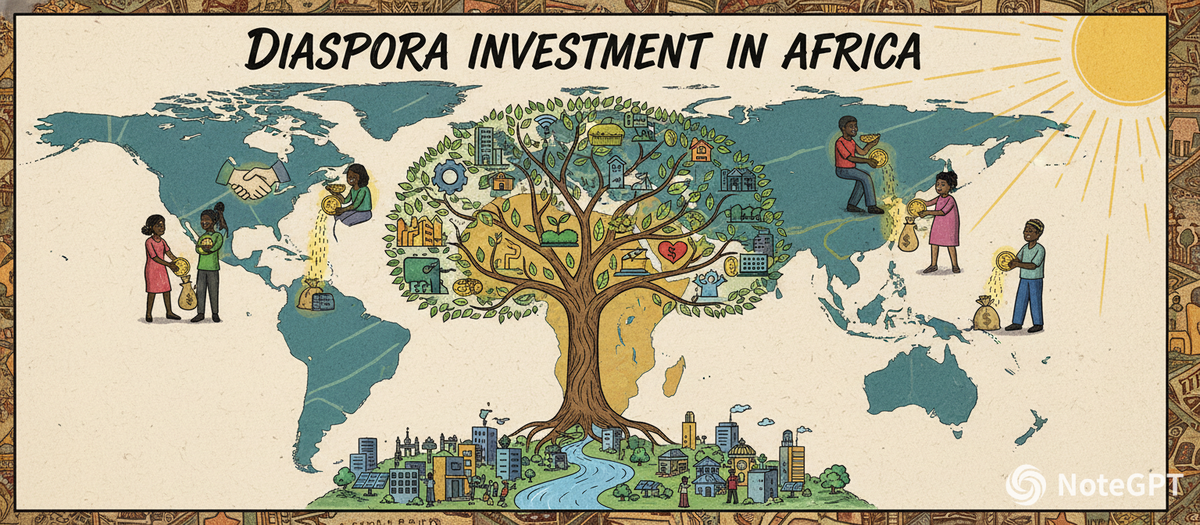
African diaspora remittances now exceed $100 billion annually, accounting for roughly 6 percent of the continent's GDP. In several African economies, these inflows surpass both foreign direct investment and official development assistance combined, making them the single largest source of external capital. Nigeria leads the continent, receiving $21 billion in 2024 with projections pointing to $23 billion, followed by Egypt, Kenya, Ghana, Tunisia and Algeria as major recipient nations. The scale is enormous, yet the structural problem remains unchanged: the vast majority of this capital flows directly into household consumption — school fees, medical bills, food — rather than into productive, wealth-compounding investment vehicles.
This is the gap United Bank for Africa is targeting. UBA, which operates across 20 African countries with additional presence in the United States and the United Kingdom, has launched an integrated diaspora banking and investment ecosystem designed to redirect remittance capital into long-term financial instruments. The platform bundles six institutional partners under one umbrella: United Capital Plc for asset management and securities, Africa Prudential Plc for digital investment management, UBA Pensions for retirement planning, Afriland Properties for structured real estate pathways, Heirs Insurance Group for protection products, and Avon Healthcare Limited for cross-border health coverage. The architecture is built around a single thesis — that even a modest reallocation of diaspora flows from consumption into managed funds, capital markets and pension vehicles could materially deepen liquidity and strengthen capital formation across African markets.
From Dormant Assets to Active Capital Mobilisation
The data underscores a deeper trust deficit that UBA's ecosystem also aims to address. Tens of billions of naira in unclaimed dividends currently sit in dormant investment accounts across Nigeria, largely because diaspora investors lost contact with stockbrokers who became unreachable or ceased operations. The shares and underlying companies in many cases still exist — what collapsed was the record-keeping infrastructure. Through regulated custodial services aligned with Securities and Exchange Commission frameworks, UBA's platform now enables diaspora investors to trace forgotten holdings, reconcile accounts and consolidate scattered portfolios. This recovery process doubles as a confidence-building mechanism: demonstrating that investments do not vanish simply because intermediaries do.
The broader strategic calculus is straightforward. As global development finance grows more conditional and external portfolio flows remain volatile, Africa's ability to mobilise its own dispersed capital becomes a structural necessity rather than an aspiration. Nigeria's Central Bank has introduced reforms to boost formal remittance channels and improve foreign exchange transparency — policy moves that signal alignment with the goal of converting diaspora transfers into long-term commitments. UBA's model pairs digital onboarding and identity verification with physical advisory relationships across its 20-country footprint, recognising that high-value diaspora investors still demand in-person trust alongside digital convenience. If even a fraction of the continent's $100 billion annual remittance flow is systematically channelled into transparent, professionally managed vehicles, the multiplier effects on investment depth, currency stability and institutional capacity could be transformative. The shift from moving money to compounding it may define the next chapter of African financial development.