The Largest US Middle East Military Operation Since 2003
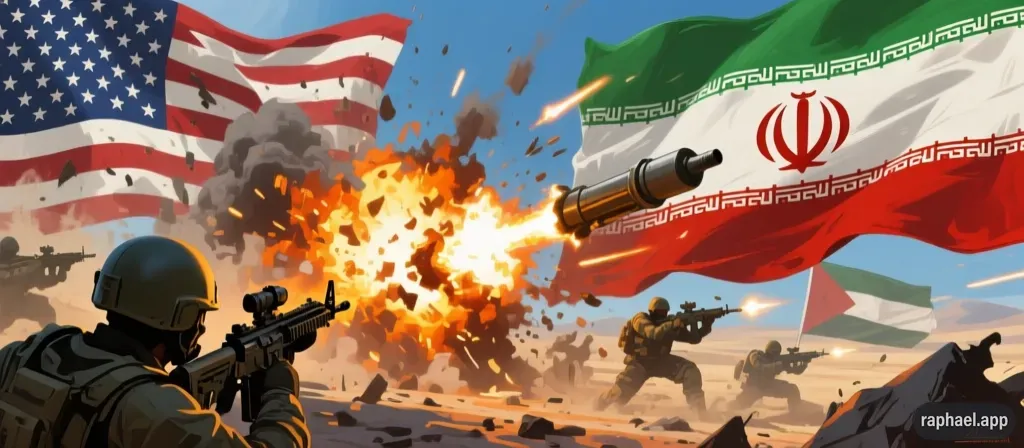
On February 28, 2026, the United States and Israel launched coordinated military strikes against Iran in what has been described as the largest American military operation in the Middle East since the 2003 invasion of Iraq. Codenamed Operation Shield of Judah, the strikes hit targets across multiple Iranian cities including Tehran, Isfahan, Qom, and Karaj, with explosions and columns of smoke reported across the capital. Israeli Prime Minister Benjamin Netanyahu confirmed in a televised statement that the compound of Supreme Leader Ayatollah Ali Khamenei had been destroyed in the heart of Tehran, adding that there were "many signs" Khamenei was no longer alive — a claim that, if verified, would mark the elimination of the most powerful figure in Iranian governance since the 1979 revolution. Israeli Defence Minister Israel Katz characterised the action as a "preventive strike," while US President Donald Trump announced that Washington had begun "major combat operations" aimed at destroying Iran's missile infrastructure and naval capabilities.
Iran's response was immediate and far-reaching. Retaliatory missiles struck facilities in the United Arab Emirates, Qatar, Bahrain, and Kuwait — including a US Fifth Fleet service centre — marking the first time Iranian missiles have hit Gulf Arab capitals simultaneously. The diplomatic fallout was equally rapid: Iran demanded an emergency United Nations meeting over what it called US-Israeli "aggression," EU foreign ministers scheduled urgent talks for Sunday, the US State Department ordered shelter-in-place across five Middle East countries, and Nigeria's Federal Airports Authority announced disruptions to Middle East-bound flights. The geographic spread of both the strikes and the retaliation underscores that this is not a contained bilateral exchange but a regional escalation with immediate consequences for civilian infrastructure, diplomatic channels, and international aviation.
Oil Markets and the Economic Shockwave
The energy market reaction has been swift and measurable. Brent crude, which had already climbed 2.45% to $72.48 per barrel on Friday in anticipation of escalation, spiked to $81 per barrel after the Saturday strikes — a five-month high. West Texas Intermediate followed a similar trajectory, jumping 2.78% to $67.02 before the strikes began. Barclays has set a near-term target of $80 for Brent, but analysts warn the ceiling could be far higher: a protracted conflict risks disrupting up to 20% of global oil supply, with the Strait of Hormuz — through which approximately 20 million barrels pass daily — sitting at the centre of the risk calculus. If the strait is threatened or partially blocked, projections from multiple analysts suggest Brent could push toward $100 per barrel, with some forecasts reaching as high as $130–$140 in a worst-case scenario. OPEC+ is scheduled to meet on Sunday, and its response will be a critical variable in determining whether supply-side adjustments can absorb or amplify the price shock.
The economic implications extend well beyond crude prices. A sustained conflict would ripple through global trade and logistics, increase shipping insurance premiums across the Persian Gulf corridor, and pressure central banks already navigating inflation concerns. For oil-importing economies in Africa and Asia, a prolonged spike above $90 per barrel would strain fiscal balances and widen current account deficits. For oil exporters like Nigeria, the short-term revenue windfall comes with the caveat of regional instability and potential disruptions to its own aviation and trade links with the Middle East. The scale of this operation — spanning multiple countries, triggering retaliatory strikes on four Gulf states, and potentially removing Iran's supreme leader from the equation — has no recent precedent. What happens in the next 72 hours, from the OPEC+ meeting to the UN emergency session, will determine whether this escalation stabilises or spirals into a broader regional war with global economic consequences.